 (CAD) $
Your Skin Is Screaming. Here’s What That Means.
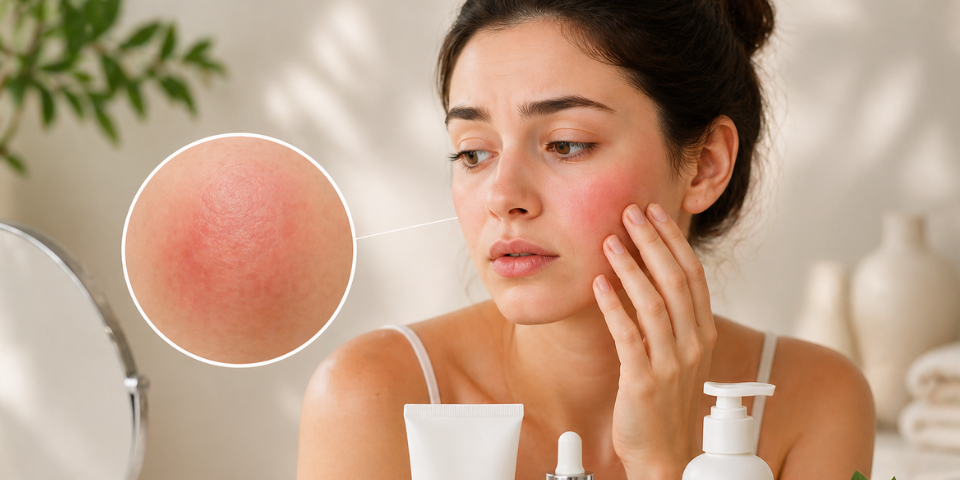
Your skin feels tight. Moisturizer stings going on. There are dry patches you didn’t have last month. Redness that just sits there, settled in. If that sounds familiar, you’ve probably been over-exfoliating. The fix is not complicated — but it starts with stopping. Barrier-first skincare is about pulling back, letting skin recover, and rebuilding what got stripped.
What Does a Damaged Skin Barrier Actually Feel Like?
Your skin barrier is the outermost layer of skin cells. Lipids hold those cells together like mortar between bricks. That structure keeps moisture locked in. It also keeps bacteria and irritants out. When it breaks down, you feel it immediately.
Watch for these signs your barrier is struggling:
- Products that once felt fine now sting or burn
- Flaky patches that stick around despite daily moisturizing
- Skin that looks red and feels raw to touch
- Sudden sensitivity to fabrics, wind, or temperature shifts
- Breakouts appearing even after cutting back on heavy products
Over-exfoliation is one of the most common triggers. AHAs, BHAs, and retinoids are real actives — genuinely effective. Used too often, though, they strip lipids faster than skin can replace them. Physical scrubs do the same thing. The barrier can’t do its job when it’s constantly being disrupted.
How Long Does It Take for a Damaged Barrier to Heal?
Everyone asks this, and the honest answer shifts case by case. Mild damage can clear in one to two weeks. More disrupted barriers need four to six weeks — sometimes longer. Skin renews itself on a roughly 28-day cycle. Give it at least one full cycle before you judge the progress.
The quicker you ditch the irritating habits, the faster skin responds. Patience is not a soft suggestion here — it’s the whole strategy.
What Should You Actually Put on Your Skin Right Now?
Barrier-first skincare has one core idea: less, but better. Fewer products, gentler formulas, ingredients that support repair. That’s the whole brief.
Ingredients worth looking for right now:
- Ceramides (NP, AP, or EOP) — these lipids are your barrier, literally. Products with these rebuild what got stripped at the structural level.
- Niacinamide — calms inflammation and tightens the barrier without added irritation.
- Hyaluronic acid — pulls moisture into skin without needing an intact barrier to hold it.
- Panthenol (Vitamin B5) — deeply hydrating and known for tissue-level repair.
- Squalane — a lightweight oil that mirrors your skin’s natural sebum, sealing moisture back in.
Cut these out temporarily: exfoliating acids, retinoids, alcohol-heavy toners, fragrance, anything that’s causing a visible reaction. Not forever. These aren’t bad — they’re just not what a recovering barrier needs right now. They come back later.
Does Everyone Need This Approach, or Just Damaged Skin?
Fair question. Barrier-first isn’t only a repair strategy. It’s a solid foundation for anyone stuck in the cycle of aggressive actives. A lot of people use acid toners daily, rotate between retinoids, and wonder why skin never quite settles. Often it’s because the barrier never gets enough breathing room.
Even healthy skin gains from consistent hydration and low-irritant products. Think of barrier care as the base layer — everything else works better on top of it. The actives targeting pigmentation, texture, and fine lines perform noticeably better on uncompromised skin.
When Can You Start Reintroducing Actives?
Slowly. That word does a lot of work here. When stinging stops and dry patches are gone, when redness settles and sensitivity drops — that’s the window. Start with one product at a time. Space each introduction a few weeks apart. Track how skin responds over 48 to 72 hours before adding anything else.
A sensible re-entry order: low-percentage niacinamide first, or a gentle lactic acid. Work upward from there. Retinoids and stronger acids come last in line. The skin tells you when it’s ready — that’s the only timeline worth following.
Where Does MCCM Fit Into This?
MCCM Medical Cosmetics formulates at a professional level. The active concentrations are real, which means how you use them matters equally. If your skin is in recovery mode, MCCM’s hydration and soothing-focused products offer clinical-grade support without pushing a compromised barrier further. When you’re ready to bring actives back, you’re working with precisely dosed formulas built for actual results.
Your skin doesn’t need more products right now. It needs the right ones.
Explore the MCCM collection and find what your skin actually needs today.