 (CAD) $
Walk into any beauty store, and you will see dozens of shelves packed with hundreds of products. They all promise one thing: Results. But for someone with sensitive skin, that wall of options isn’t exciting. It’s overwhelming — and sometimes, dangerous.
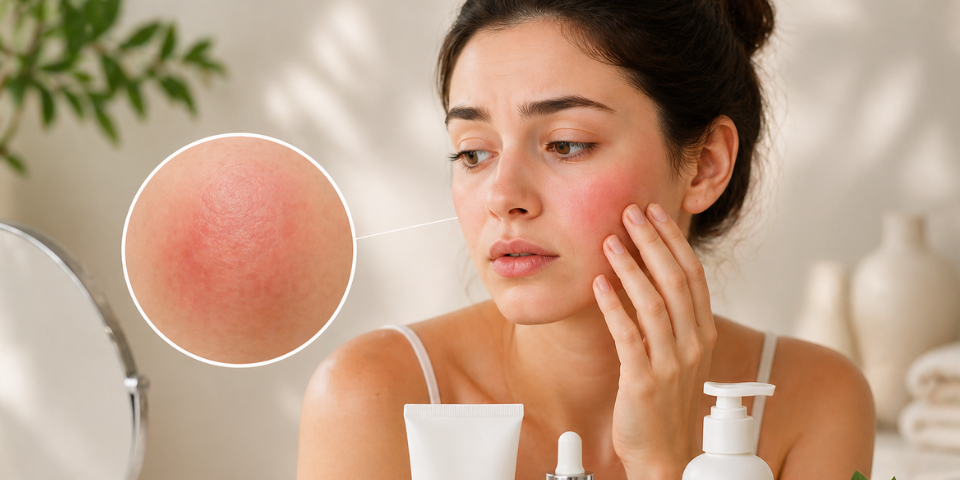
When you choose the wrong product, you don’t just go through a bout of acne. The ingredients trigger other symptoms, such as burning, redness and long-term skin damage. This is why it is essential to understand skin sensitivity because it is the foundation of every skincare decision.
What is Sensitive Skin?
“Skin that reacts to more than it should compared to what bothers most people.”
This includes ingredients and the environment. Keep in mind that sensitive skin is not a diagnosis but a description. Meaning: It’s not a skin allergy. Allergy involves a weakened immune system, whereas sensitivity is simply a disruption in the skin barrier. So, when you apply products that aren’t suited to your skin, it gets irritated.
Understanding Skin Sensitivity
The skin’s outer protective layer is called the “skin barrier.” In its healthy state, the skin locks in moisture and keeps out irritants. When it’s compromised, everything gets through. That’s when sensitivity flares up. According to the Cleveland Clinic, this condition occurs when your skin becomes easily irritated by factors that would not typically provoke a reaction in normal skin types.
Several things can weaken that barrier:
- Hormonal fluctuations.
- Certain medications that dry or thin the skin.
- Harsh cleaners or over-exfoliation strip natural oils.
- Genetics — Some people are born with a thin skin barrier.
- Environmental stressors like UV exposure, pollution, and cold weather.
The tricky part? Sensitivity isn’t always consistent. Your skin can behave normally for months, and then suddenly react to a product you have used for years. That’s why understanding the condition — not just the symptoms — matters so much.
Identifying Sensitive Skin Indicators
Most people don’t know they have sensitive skin. They assume that their skin is simply “moody” or “difficult.” According to research from the National Institutes of Health, sensitivity occurs due to sensory reactions without displaying visible clinical signs.
Here’s what to watch for:
- Reactions to New Products in 48 Hours – Redness, itching and breakouts.
- Visible Flushing – Caused by heat, alcohol or spicy food.
- Tightness After Washing – Your skin feels tight to the touch and movement, as if it will crack at any moment.
- Fragrance Intolerance – Products with fragrances can cause irritation.
- Seasonal Flare-Ups – In dry conditions or winter, the skin worsens.
How many reactions do you relate to? If it’s more than two, you most likely have sensitive skin. However, do visit a dermatologist to get a proper diagnosis.
Why Does Sensitive Skin Matter in Beauty Care?
Sensitive skin reacts to everything that normal skin doesn’t. Meaning: If a certain product works for your friend, it doesn’t mean it will work for you, too.
More people have sensitive skin than the beauty industry admits. Research shows that roughly 60–70% of women and 50–60% of men report some degree of sensitive skin. That’s not a niche group. That’s most of your clients. This is why it boggles the mind when brands say that a product is built particularly for sensitive skin.
A quick look at the shelves will reveal that most of these products contain strong active ingredients, preservatives and fragrances. For a compromised skin barrier, they cause real problems. Stinging. Redness. Breakouts. Peeling. Reactions that take days to calm down.
It gets worse. The labels sometimes lie. According to a study that involved more than 200 products marketed as hypoallergenic, 74% of them contained known ingredients or allergens that cross-react. So, a product can say “sensitive skin approved” on the front and quietly include the very ingredients that trigger a reaction.
Choosing the wrong product doesn’t just cause a bad skin day. Done repeatedly, it weakens your barrier further. That makes future reactions more likely, not less. It becomes a cycle that’s hard to break.
Understanding your sensitivity level isn’t vanity. It’s the foundation of every product decision you make.
How to Choose the Right Products for Sensitive Skin
The best way to ensure your sensitive skin does not become a problem when applying products is to read the labels. Always test products before adding them to your skincare regimen. The first application will reveal whether the formula suits your skin or not.
Start here:
- Look for Fragrance-Free Products: The word “unscented” does not hold any value. If it’s written on the label, the product contains masking fragrances.
- Simplify Your Routine: Don’t go overboard with trending products. Keep the list to a minimum. This will help you avoid any harsh reactions.
- Avoid High-Concentration Actives: When picking a product, go for one with the least concentration of acids and retinoids. Until your skin becomes stronger, choose products with light formulas.
- Choose Hypoallergenic, Non-Comedogenic Formulas: Though such products are not foolproof, they lessen the chances of reactions.
Common Irritants for Sensitive Skin
-
- Alcohol
- Sulfates
- Menthol
- Parabens
- Essential Oils
- Sunscreen – Fragrant and Lower Than SPF 30
- Cleanser – Fragrant and Comedogenic Product
- Moisturizer – Allergenic Ingredients (Formaldehyde Releasing Agents, Nickel, PPD (p-Phenylenediamine), Oxybenzone, Lanolin, Methylisothiazolinone (MIT), Propolis, FD&C Red 40 and Aluminum)
Other Tips for Choosing Skincare Products for Sensitive Skin
- Always do a patch test.
- Use lukewarm water.
- Avoid harsh scrubbing.
- Dry your skin gently with a soft cotton towel.
- Apply moisturizer immediately to keep your skin hydrated for longer.
Ingredients that Support a Weak Barrier
- Centella Asiatica – Helps calm down inflammation.
- Ceramides – Keep the skin’s protective layer intact and even restore it.
- Hyaluronic Acid – Hydrates the skin without irritating it.
- Niacinamide – Reduces side effects, such as redness and strengthens the skin barrier.
The Bottom Line
Don’t take skin sensitivity as an inconvenience. This is vital information telling you that your skin has a weak barrier and needs support. It allows you to choose products carefully and not waste your money on something that might end up in the bin.
The skincare industry is always innovating. From trending routines to bold claims and new ingredients, not all of it is invented with all skin types in mind. So, do your homework. Read the labels with your triggers in mind before you commit. The purpose of your skincare routine is to make your skin look good… not worse.